
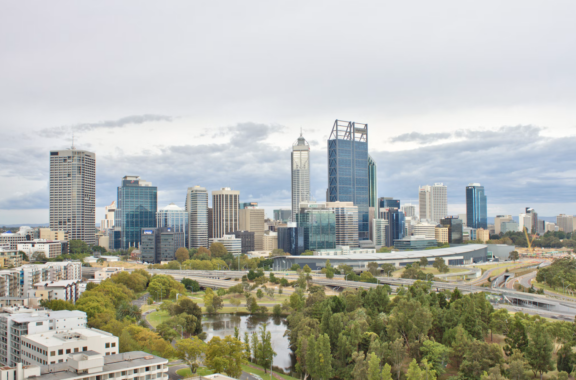
For organisations reviewing their next office lease, the definition of premium office space in Perth has shifted. Address, views and lobby finishes remain important, but leasing decisions now turn on harder questions: how a building performs, how it is independently rated, and how well it supports the people who work in it.
Sustainability sits at the centre of those questions. Understanding what each rating measures, and how to compare them, makes it far easier to identify a building that will support an organisation’s goals across the full term of a lease.
Why sustainability now shapes leasing decisions
Across Australian CBDs, many organisations are consolidating into fewer, higher-quality buildings, and sustainability performance has become a central part of how quality is defined. Three factors are driving this shift.
ESG reporting and corporate commitments
For many organisations, the office is a significant source of operational emissions. As ESG and climate reporting expectations increase, the performance of a leased building feeds directly into an organisation’s own disclosures. Some corporate and government occupiers now set minimum sustainability ratings in their property policies, making credentials a formal requirement rather than a preference.
Operating costs and outgoings
An efficient building typically uses less energy and water to operate. Over the term of a lease, this can translate into more predictable outgoings and lower energy-related costs, particularly where tenants pay for their own power consumption.
Workplace expectations
Employees increasingly expect their workplace to reflect their values. Natural light, good indoor air quality and a building that takes its environmental responsibilities seriously are visible signals that an employer values the employee experience. In a competitive Perth labour market, these attributes support both recruitment and retention.
With sustainability now a genuine leasing consideration, the next question is which credentials provide reliable evidence of a building’s performance.
Sustainability credentials to look for when leasing
Several independent rating systems assess commercial office buildings in Australia. When comparing buildings, these are the credentials tenants should ask a landlord to evidence.
NABERS ratings
NABERS (the National Australian Built Environment Rating System) is a government-backed program that rates a building’s actual performance. Ratings are based on 12 months of measured operating data, on a scale of up to 6 stars. Office buildings can be rated for energy, water, waste and indoor environment.
Because NABERS measures real performance rather than design intent, a strong rating indicates that a building operates efficiently in practice. For tenants, this can translate into lower energy-related costs and more reliable data for sustainability reporting.
Green Star ratings
Green Star is Australia’s national, voluntary sustainability rating system for buildings and communities, administered by the Green Building Council of Australia (GBCA). Ratings range up to 6 stars, which represents world leadership in sustainable building practice.
A Green Star rated office building has been assessed across categories including energy, water, materials, transport, indoor environment quality and management. The rating provides a broad indication that sustainability is embedded in how the building is designed and operated.
WELL ratings: Health-Safety and WELL Certification
The International WELL Building Institute (IWBI) offers two rating pathways that tenants are likely to encounter.
The WELL Health-Safety Rating is an operational rating. It assesses the policies and procedures that protect occupants, including cleaning and sanitisation, emergency preparedness, health service resources, and air and water quality management. It is renewed annually.
WELL Certification, under the WELL Building Standard, is a broader, performance-based certification. It assesses how a building supports health and wellbeing across ten concepts: air, water, nourishment, light, movement, thermal comfort, sound, materials, mind and community. It is awarded at Bronze, Silver, Gold or Platinum level, verified through on-site performance testing, and renewed every three years.
In short, the Health-Safety Rating reflects how a building is operated, while WELL Certification reflects how it is designed and performs.
Fully electrified buildings
A fully electrified building operates without on-site gas. As the electricity grid transitions towards renewable energy, an all-electric building has a clear pathway to lower operational emissions. For tenants with net zero commitments, this is becoming an important point of differentiation.
Knowing what each credential measures is the first step. Applying that knowledge when comparing shortlisted buildings is the next.
How to compare buildings on sustainability
Two buildings can both describe themselves as sustainable while performing very differently. A few targeted questions help separate genuine performance from marketing:
- Is the rating current? NABERS ratings are based on the previous 12 months of operation and must be renewed annually, so ask when each rating was last issued.
- What does the rating cover? Confirm whether a rating applies to the whole building, the base building or individual tenancies, as this affects how useful it is for an organisation’s own reporting.
- What is the building’s trajectory? Ask about plans for electrification, renewable energy and future rating targets over the term of the lease.
- How does the landlord support tenants? Look for energy and waste data sharing, sustainability programs and lease terms that set out shared environmental commitments.
The answers reveal not only how a building performs today, but how it is likely to perform over the life of a lease.
Beyond the ratings: sustainability in everyday building life
Ratings show how a building performs. Sustainability is also visible in how a building supports more sustainable choices every day.
- Active and low-carbon travel: quality end of trip facilities make it practical for staff to cycle, run or walk to work, while electric vehicle access supports lower-emission business travel.
- Waste and recycling programs: dedicated recycling streams beyond everyday office recycling help tenants reduce landfill and report on waste outcomes.
- Green space: access to outdoor green space supports wellbeing and gives staff somewhere to step away from screens, an increasingly valued part of the CBD workplace.
These features turn a building’s sustainability credentials into something tenants and their staff experience day to day.
How Central Park measures up
Central Park, at 152-158 St Georges Terrace, is Perth’s tallest building and one of its most sustainable. The table below sets out its current ratings, as published on the building’s sustainability page.
| Credential | Central Park |
| Green Star | 6 Green Star rating |
| NABERS Energy | 5 stars (excluding GreenPower) |
| NABERS Indoor Environment | 5.5 stars |
| NABERS Water | 3.5 stars |
| NABERS Waste | 4 stars |
| WELL | WELL Health-Safety Rating (IWBI) |
| Energy source | Fully electrified building |
These ratings are supported by practical initiatives, including:
- Green Room recycling hub: a dedicated facility for the responsible disposal of materials beyond everyday office recycling.
- Tesla EV car share: delivered with MOJO, giving tenants access to an electric vehicle for business travel across the city and beyond. [CONFIRM STILL RUNNING]
Choosing premium office space in Perth that meets tomorrow’s expectations
Premium office space in Perth is now judged on more than location. Strong NABERS, Green Star and WELL credentials support an organisation’s ESG commitments and provide independent assurance of how a building performs. Asking the right questions about those credentials, and about how a building supports sustainable choices day to day, helps ensure a lease decision holds its value over time. Thoughtful amenities, in turn, give staff real reasons to come in and help organisations attract the people they want to hire.
Frequently asked questions
- What is the difference between premium and A grade office space?
Premium office space sits one level above A grade on the Property Council of Australia’s quality scale. Both offer modern, well-serviced floors, but premium buildings typically add landmark presence, superior views, higher-end lobbies and finishes, and a wider range of amenities. A grade office space in Perth can still offer excellent value for businesses with a tighter budget. - Do sustainable office buildings cost more to lease?
Sustainable office buildings can command higher rents, although they often reduce other costs. Efficient buildings typically use less energy and water, which can lower outgoings, and strong ratings simplify ESG reporting. Many tenants also attribute value to staff attraction and retention. Comparing total occupancy cost and benefits, rather than headline rent alone, gives the clearest picture. - What amenities do tenants look for in an office building?
Tenants commonly prioritise end of trip facilities, an on-site gym, quality meeting and conference spaces, food and beverage options, concierge services and convenient public transport access. Access to green space and outdoor areas is increasingly valued. Together, these amenities support staff wellbeing and make the office a place people choose to attend.